


Obby: Disaster Survival
3.316.00 Reviews
App Specs
- Version
- 1.12
- Updated On
- License
- Free
- Downloads
- 1,000,000+
- Developer
- Blox Global
- Categories
- Adventure
- Platform
- Android
Screenshots
 Analysis by AppCompare
I first picked up Obby: Disaster Survival for the simple appeal of its premise: react quickly, stay alive, and see how long I can keep my footing when a disaster turns an obstacle course into a scramble. It is an adventure game from Blox Global, and that straightforward loop is its strongest idea. Rather than asking me to learn a deep story before the fun begins, it puts the emphasis on movement, timing, and making a quick choice under pressure. That makes it easy to understand, though the lasting appeal depends on whether you enjoy repeating short survival challenges and improving through practice.
Small goals make the first rounds click
The most useful way to approach a first session is to treat each attempt as a small lesson, not a test you must pass perfectly. I focus on learning where safe routes seem to be, how much time I have to react, and which mistakes leave me exposed. That gives the opening rounds a natural goal even before I know the game well: survive a little longer, make one fewer rushed move, and leave with a better sense of how a hazard changes the space around me.
That kind of immediate objective suits the obby-style adventure format. A long tutorial or elaborate plan would get in the way of the quick, readable premise. I can start with a basic intention—keep moving, look for safer ground, and avoid being distracted by other players—and adjust as the situation unfolds. The game is most inviting when I am in the mood to concentrate for a short burst rather than settle in for a slow, story-led campaign.
Progress is measured in better decisions
Not every satisfying sign of progress needs to be a new item or a large unlock. Here, I find the clearest improvement in how I respond: I stop running toward the first visible opening, watch how the danger is changing the route, and choose a path with room to recover if I mistime a jump. That is a more useful personal benchmark than simply asking whether I survived. It also helps explain why a familiar scenario can still feel worthwhile after an early failure.
When I play with friends, the social part changes what counts as a good round. We can compare choices, warn one another about a risky route, or simply laugh when a confident plan falls apart. Playing together can make a loss feel less frustrating, but it is not a substitute for paying attention; a friend’s route may not be the safest one for me. I would use group play for shared entertainment and solo attempts when I want to focus on my own timing.
Challenge depends on reading the hazard
The main skill I would build is not constant sprinting but quick observation. A disaster changes what looks safe, so I try to notice whether a route is narrowing or whether higher ground offers a better option before I commit. The distinction matters: moving quickly can help, but moving without a plan can put me in a worse position. In that sense, the pressure comes from making decisions with limited time, not from mastering a complicated set of controls.
That challenge can be appealing to players who enjoy retries, but it may be less satisfying for someone who wants a steady, carefully explained difficulty curve. A round can feel fair when I understand what went wrong; it feels more irritating when I rush, miss a cue, and cannot tell which choice would have helped. I recommend treating an early failure as feedback rather than evidence that the game is impossible. If a session stops feeling like a fun test of reactions, taking a break is more sensible than forcing another attempt.
Worth Reading Before You Choose

EA SPORTS FC Mobile 26 Is a Bigger Football Game, but It Takes Time

Flipboard Shows What News Apps Must Do Beyond the Feed

Switching to Android Auto Means Rethinking Your Driving Routine

Google Calendar Makes a Crowded Week Easier to Manage

Ludo King Makes the Most of the Minutes Between Plans

Baby Panda World Brings Quick Play to Modern Phones, but Its Game Library Feels Busy
How it fits a spare moment
A realistic use for the game is a short break while waiting for a ride, a friend, or a meal to arrive. I can set a modest goal—try a few rounds and pay attention to one hazard or movement decision—without needing to remember a long plot or manage a complicated build. That makes it more convenient than many adventure games that ask for a bigger time commitment before a session feels complete. It is still a game that rewards attention, so I would not choose it when I need to keep half an eye on something important nearby.
Compared with a traditional platform adventure, the appeal is less about following a carefully authored journey and more about responding to an unpredictable-feeling survival situation. Compared with a relaxed obstacle course, the disaster framing gives each route a sense of urgency. Those are useful differences if I want a quick reaction challenge, but they are also reasons to choose something else if I prefer exploration, a strong narrative, or a calm pace. The game works best as a compact change of mood, not as a replacement for every kind of adventure.
There is a trade-off in that focus. The premise is easy to grasp, so I can get into the action without a lot of explanation; at the same time, players who want many layers of long-term planning may find the central loop too direct. I would judge its replay value by whether I enjoy refining a run and sharing the chaos, rather than expecting every session to introduce a completely different kind of play. That expectation makes for a fairer decision before downloading.
Jump into the Chaos
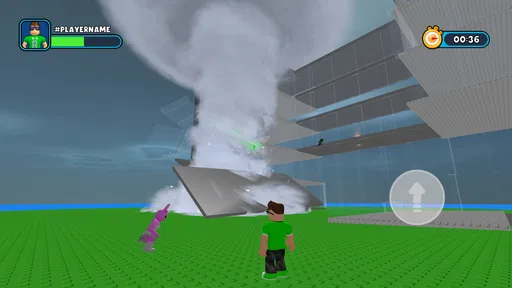
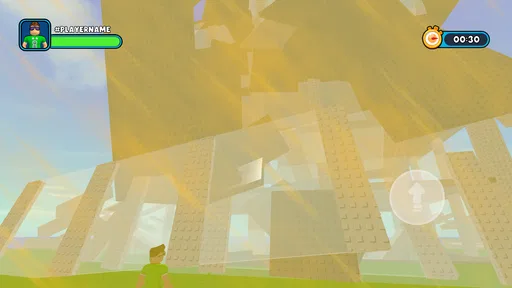
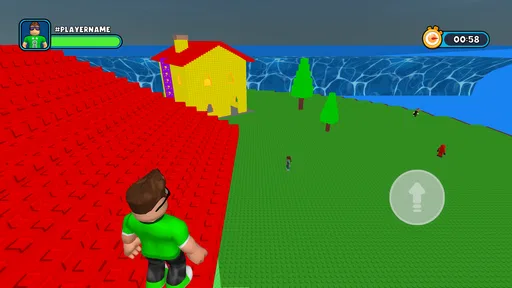
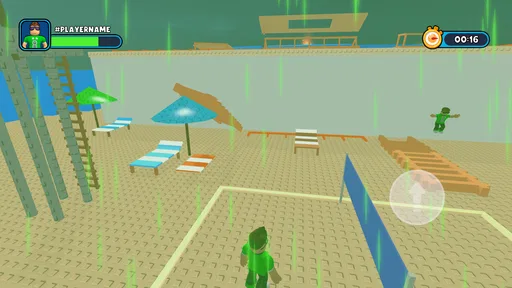
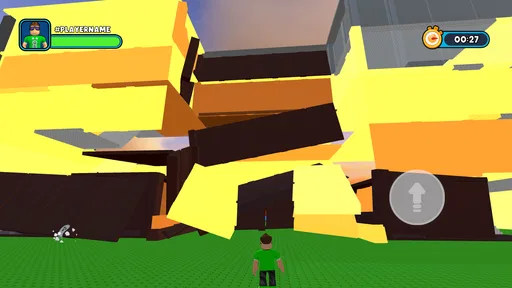
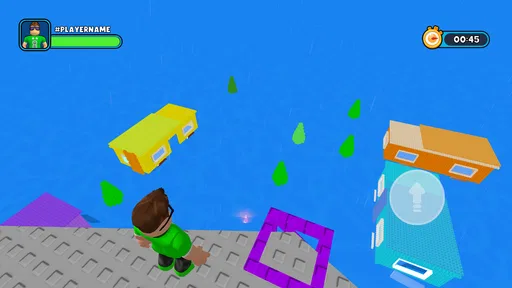
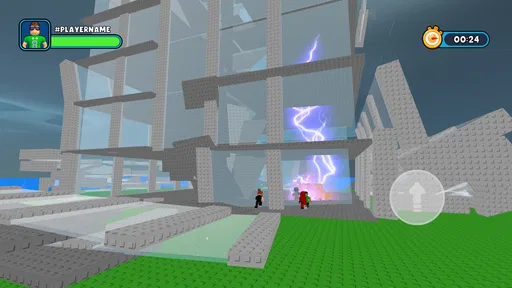
Once you launch Obby: Disaster Survival, you’re greeted with a colorful yet chaotic world. The graphics are somewhere between playful and intense, which really sets the mood for the kind of challenges you'll face. There's something oddly satisfying about the bright colors contrasting with the impending doom of a disaster.
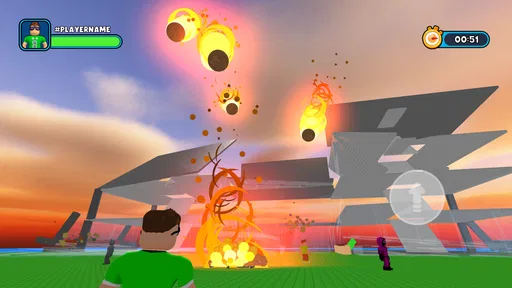
The game throws you right into the action. You’ll find yourself dodging meteors, escaping floods, and maybe even outrunning a rogue tornado or two. It’s all about reflexes and quick thinking. The controls are intuitive, which is crucial when you’re trying to avoid being squashed by a falling boulder. It’s like the game knows you don’t have time to fumble around with complicated maneuvers.
Survival Strategies
Now, let's get down to strategies. Each disaster brings its own set of challenges. For example, during a flood, you’ll need to climb to higher ground, while during a meteor shower, it’s all about finding cover. The game really tests your ability to adapt on the fly.
One of my favorite features is the ability to team up with friends. Trust me, it’s much more fun to escape disasters together than to go at it alone. Plus, you can always blame your friends if things go sideways. It's a collaborative effort where you can strategize and scream in panic together, which adds a layer of fun and camaraderie.
The Thrill of Variety
If you’re worried about the game getting repetitive, don’t be. Obby: Disaster Survival keeps things fresh with a variety of maps and scenarios. From the fiery depths of a volcano to an icy tundra, each environment presents its own unique challenges. It’s like a buffet of disasters, and you get to sample them all.
Moreover, the game introduces new disasters and updates regularly. This means there’s always something new to look forward to. It keeps the game engaging and ensures that players don’t get bored easily. It’s a smart move from the developers, keeping us on our toes.
Why You’ll Keep Coming Back
Aside from the sheer fun of the game, there’s a sense of accomplishment that comes with surviving each disaster. It’s a test of skill and wit, and when you finally escape unscathed, it’s a real adrenaline rush. Plus, the leaderboard feature adds a competitive edge, pitting you against players worldwide. It’s all about bragging rights, right?
And let’s not forget the customization options. You can tweak your avatar to suit your style. Whether you want to look like a suave survivor or a quirky adventurer, the choice is yours. It’s a fun way to express your personality and stand out in the chaotic world of disasters.
Making the most of a run
To get more from a session, I would choose one thing to practise rather than trying to fix every mistake at once. For example, I might focus on checking the route before moving, or on avoiding a last-second turn when a safer path is already available. This makes a round useful even if I do not make it to the end. It also keeps the game from turning into a string of impatient retries, where I repeat the same move without learning anything from it.
Playing with friends can be especially enjoyable when everyone treats the outcome lightly. A quick callout may help someone spot a route, but it can also pull my attention away at exactly the wrong moment. I find that the best balance is to agree on simple communication—share a useful warning, then let each person react for themselves. That keeps the group element fun without making me depend on somebody else to steer my character.
Another small but important choice is when to stop. A fast survival game invites the thought that the next attempt will surely be the good one, but that can turn a short break into a longer stretch of repeated frustration. I would set a natural stopping point, such as ending after a satisfying escape or after I have tried a particular approach a few times. This is not a rule the game imposes; it is simply a practical way to keep the quick challenge enjoyable.
Who should try it, and who may prefer another game
I would recommend it to players who enjoy short, reactive challenges, colorful obstacle courses, and the fun of comparing attempts with friends. It is also a reasonable choice for someone who wants an adventure game that can be understood quickly, without needing to invest in a complicated character plan before playing. The broad Everyone age rating makes its intended audience wide, though a parent should still decide whether a fast, hazard-focused game suits a particular child.
I would steer away from it if you mainly want a peaceful exploration game, a substantial narrative, or a carefully paced solo campaign. It may also be a poor fit if repeated attempts feel like busywork rather than a satisfying chance to improve. Players who want a more methodical platforming experience may prefer an alternative built around deliberate level-by-level progress; someone after a more social session may find this game a better match, provided the group enjoys quick reactions and occasional setbacks.
It is free to play, which makes trying it a low-commitment decision, but “free” does not guarantee that its style will suit everyone. I would install it when I have time to give the hazards my attention, rather than expecting it to work as background entertainment. The difference between a good session and a frustrating one may be as simple as whether I am ready to react or distracted by another task.
What to expect before downloading
The game has an average rating of 3.4 from around 1.3 thousand ratings, and it has passed one million installs. Those figures suggest that plenty of players have tried it, while the middling average is a reminder that its quick, repeatable challenge will not land equally well for everyone. I would read that as a reason to approach it with realistic expectations: the central idea is easy to understand, but enjoyment depends on whether I like adapting under pressure.
It was released on September 20, 2025, and version 1.10 is listed for devices running Android 7.0 or later. The game is developed by Blox Global. These details are useful if I am checking whether a device meets the basic requirement, but they do not change the main question: do I want a compact disaster-themed obby, or would another adventure style suit my free time better?
My practical recommendation is to try it for the kind of session it is designed to offer: a few focused attempts, a chance to improve a decision, and perhaps a shared round with friends. I would not approach it expecting every run to feel new or every challenge to reward a long strategy. Its appeal is in responding to danger, enjoying the lively presentation, and finding satisfaction in a better escape than last time.
Final Thoughts
In the world of mobile gaming, Obby: Disaster Survival stands out as a thrilling escape from the mundane. It’s not just a game; it’s an experience. Whether you’re a casual player looking for a quick escape or a hardcore gamer seeking a challenge, there’s something here for everyone. So, if you’re ready to test your survival instincts, this game is definitely worth a download.
Remember, in Obby: Disaster Survival, the only thing you can expect is the unexpected. Grab your phone, gather your friends, and jump into the chaos. Who knows, you might just find your new favorite pastime.
Pros
- Engaging gameplay with diverse challenges.
- Colorful graphics enhance user experience.
- Multiplayer mode for social interaction.
- Regular updates with new content.
- Intuitive controls suitable for all ages.
Cons
- In-app purchases can be expensive.
- Occasional lag in online play.
- Ads may interrupt gameplay.
- Limited offline features.
- Requires consistent internet connection.
FAQs for Obby: Disaster Survival
What is Obby: Disaster Survival?
Obby: Disaster Survival is a thrilling mobile game where players navigate through various disaster scenarios. The objective is to survive different catastrophes by solving puzzles and avoiding obstacles. With engaging graphics and dynamic gameplay, it offers a unique experience for fans of action and strategy games.
Is Obby: Disaster Survival free to play?
Yes, Obby: Disaster Survival is free to download and play. However, it contains in-app purchases that enhance gameplay, such as unlocking special tools or features. These purchases are optional, and players can enjoy the core game without spending money.
What platforms support Obby: Disaster Survival?
Obby: Disaster Survival is available on both Android and iOS platforms. It is optimized for smartphones and tablets, providing a seamless gaming experience across different devices. Ensure your device meets the minimum system requirements for optimal performance.
Does Obby: Disaster Survival require an internet connection?
While Obby: Disaster Survival can be played offline, certain features like leaderboards and in-app purchases require an internet connection. Playing online ensures you have access to the latest updates and features, enhancing your overall gaming experience.
Are there any age restrictions for playing Obby: Disaster Survival?
Obby: Disaster Survival is suitable for players aged 9 and above. The game contains mild cartoon violence and puzzle-solving elements, making it appropriate for younger audiences. Parents can enable parental controls on devices to manage in-app purchases and screen time.


